Code Calmly: Minimalist Developer Productivity
Introduction: When Productivity Starts Getting in the Way
Like most developers, I spent years optimizing my workflow.
New note-taking apps. New productivity systems. New automation tools. New browser extensions.
Every week there seemed to be another tool promising better focus and higher output.
The result?
More complexity. More maintenance. More distractions.
At some point I realized I was spending more time managing my productivity system than actually building things.
So I started removing things.
One app at a time.
One shortcut at a time.
One decision at a time.
What remained was surprisingly simple.
Today my entire workflow revolves around four applications and a handful of keyboard shortcuts.
And I've never felt more productive.
Productivity isn't about adding more. It's about removing what's unnecessary.
1. The Philosophy: Reduce Friction
Every application asks for attention.
Every notification creates a context switch.
Every icon on your screen competes for mental bandwidth.
Individually these things seem insignificant.
Together they create noise.
I've learned that focus isn't something you force.
It's something you design for.
The fewer decisions I have to make throughout the day, the more energy I can spend on solving actual problems.
Minimalism isn't about owning fewer things.
It's about removing friction between intention and action.
2. My Environment: An Invisible Workspace
When I open my Mac, there's almost nothing to look at.
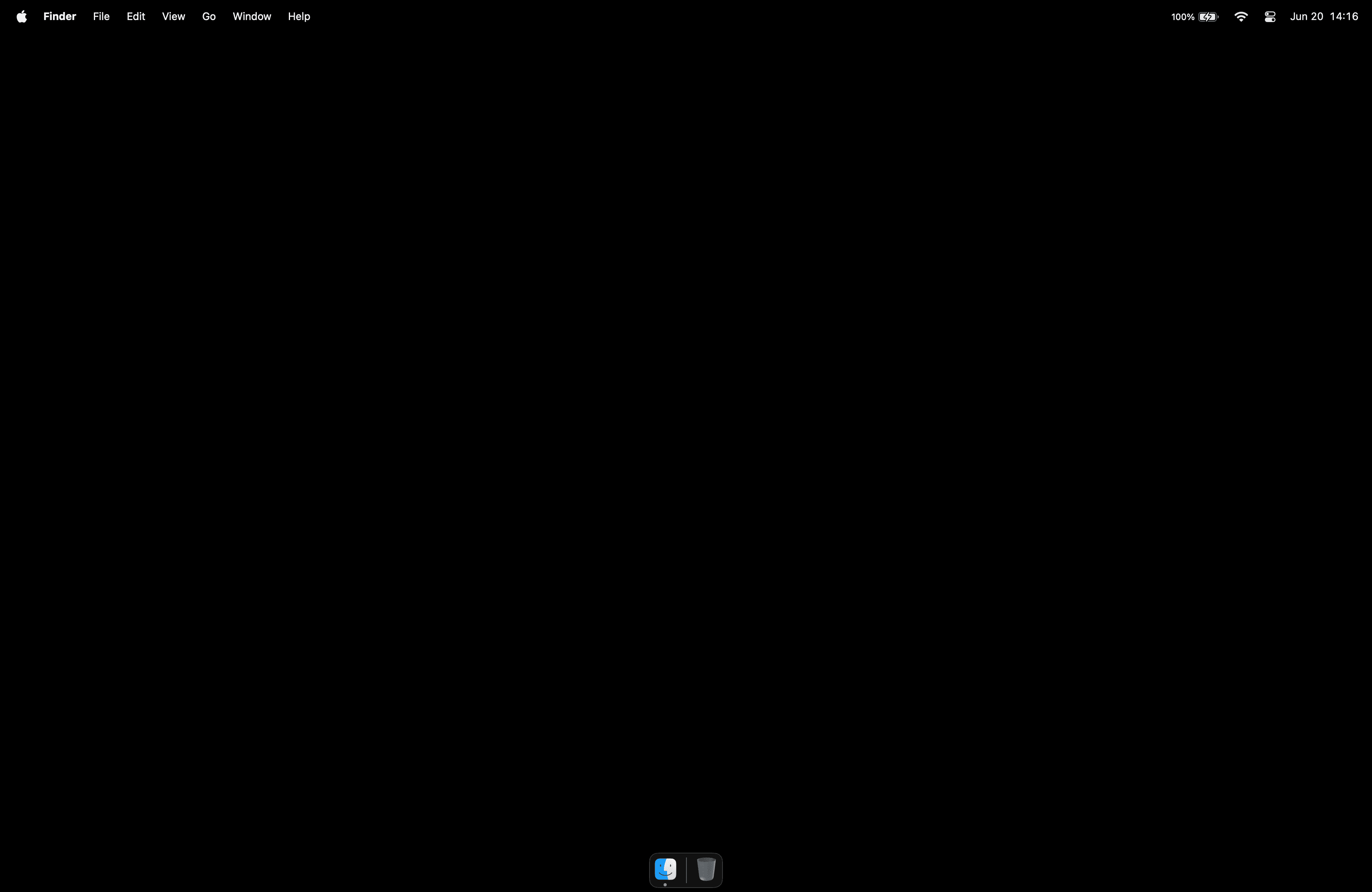
Pure black minimalist desktop wallpaper
My dock contains only two applications:
Finder Along with the Trash.
That's it.
No folders.
No utility apps.
No collections of tools I'll "probably use later."
Nothing competes for attention.
The environment stays quiet so the work can stay loud.
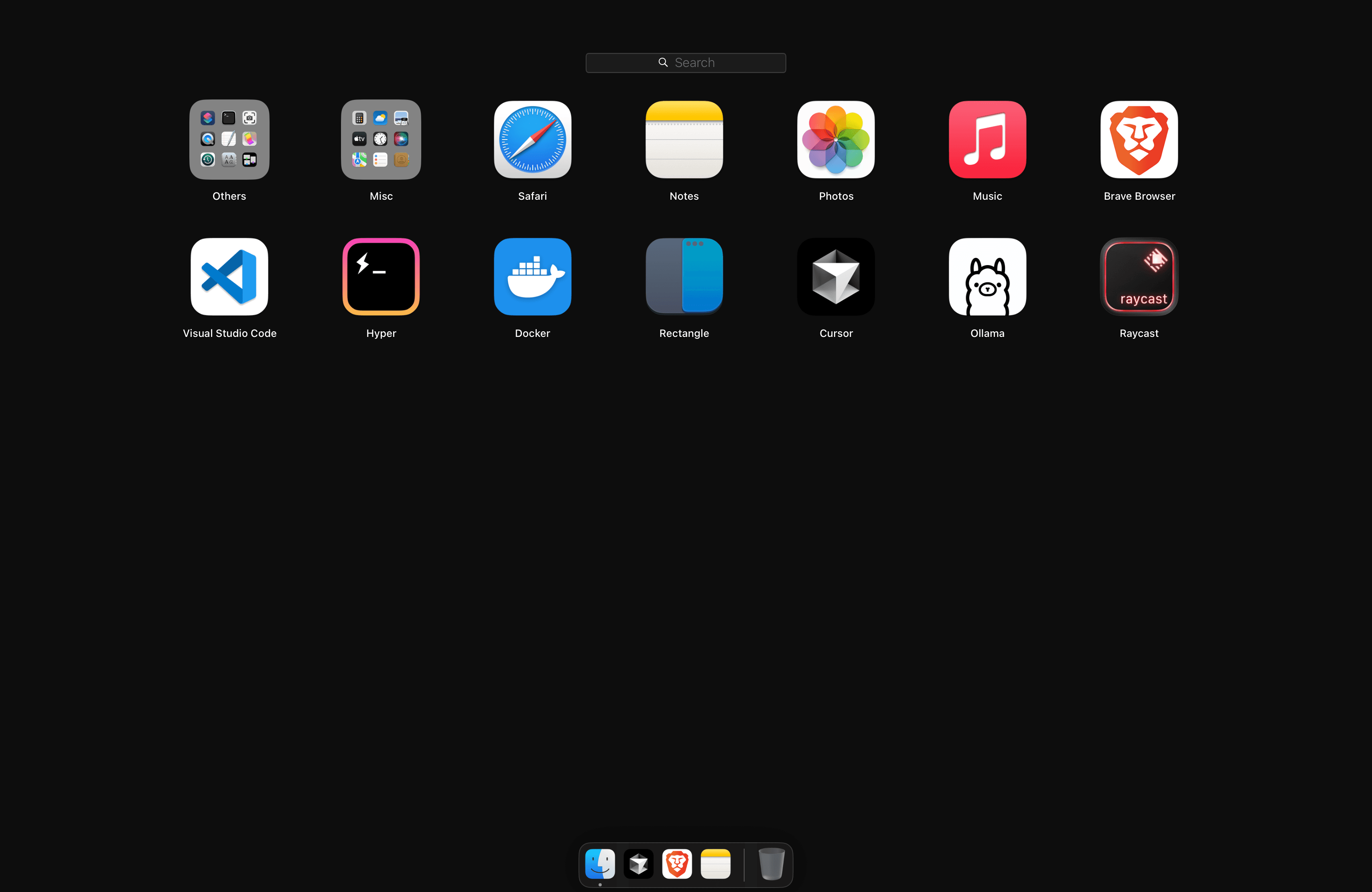
My minimal Mac dock setup
3. The Three Apps I Actually Use
After years of experimenting, I've settled on Three applications that cover almost everything I need.
⚡ Raycast
The command center for my entire computer.
💻 Cursor
My primary editor and development environment.
🌐 Brave
My browser, configured with vertical tabs and almost no distractions.
4. Raycast Became My Operating System
If there's one application that defines my workflow, it's Raycast.
I use Caps Lock as a Hyper key and navigate almost everything through keyboard shortcuts.
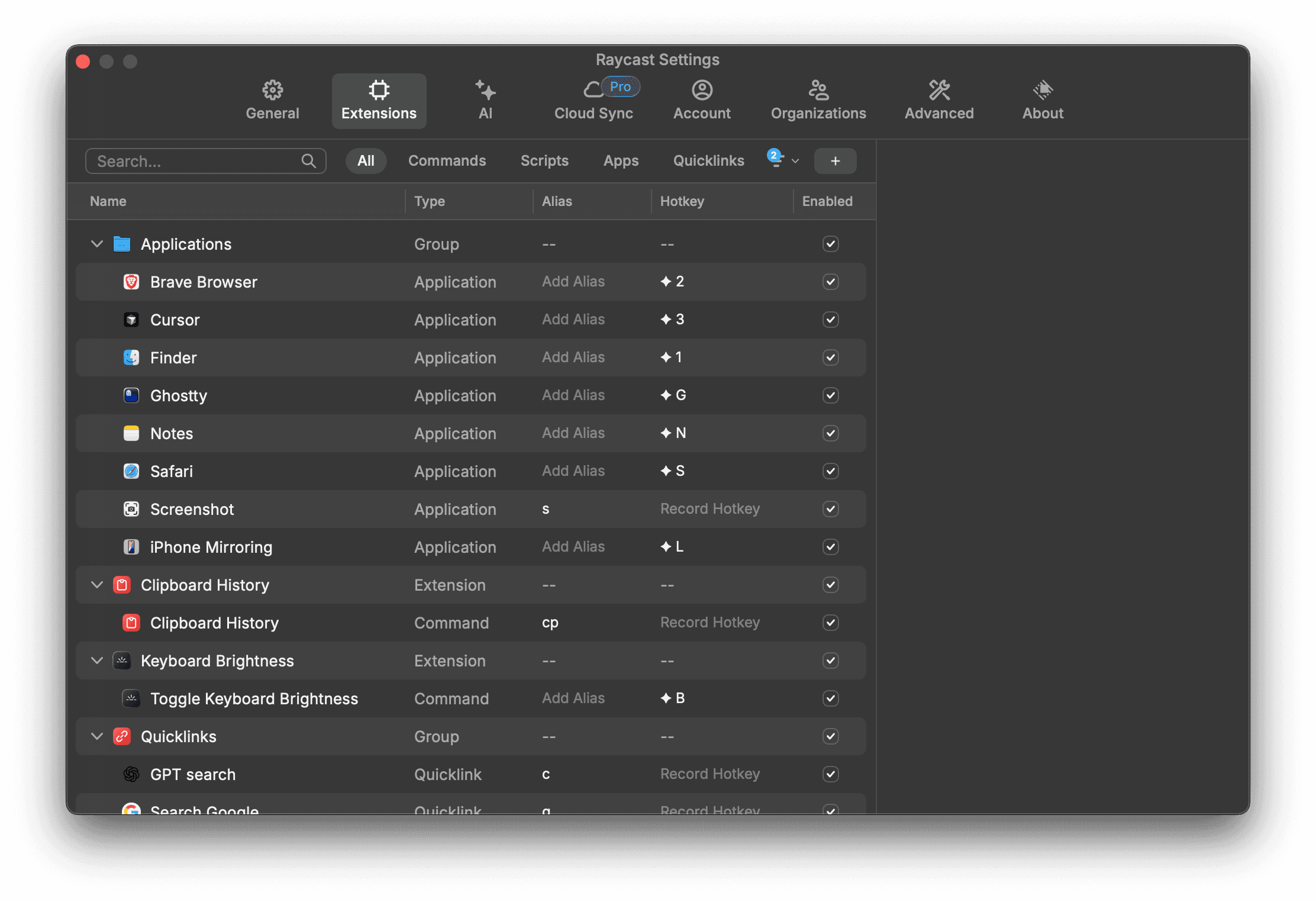
Raycast command launcher
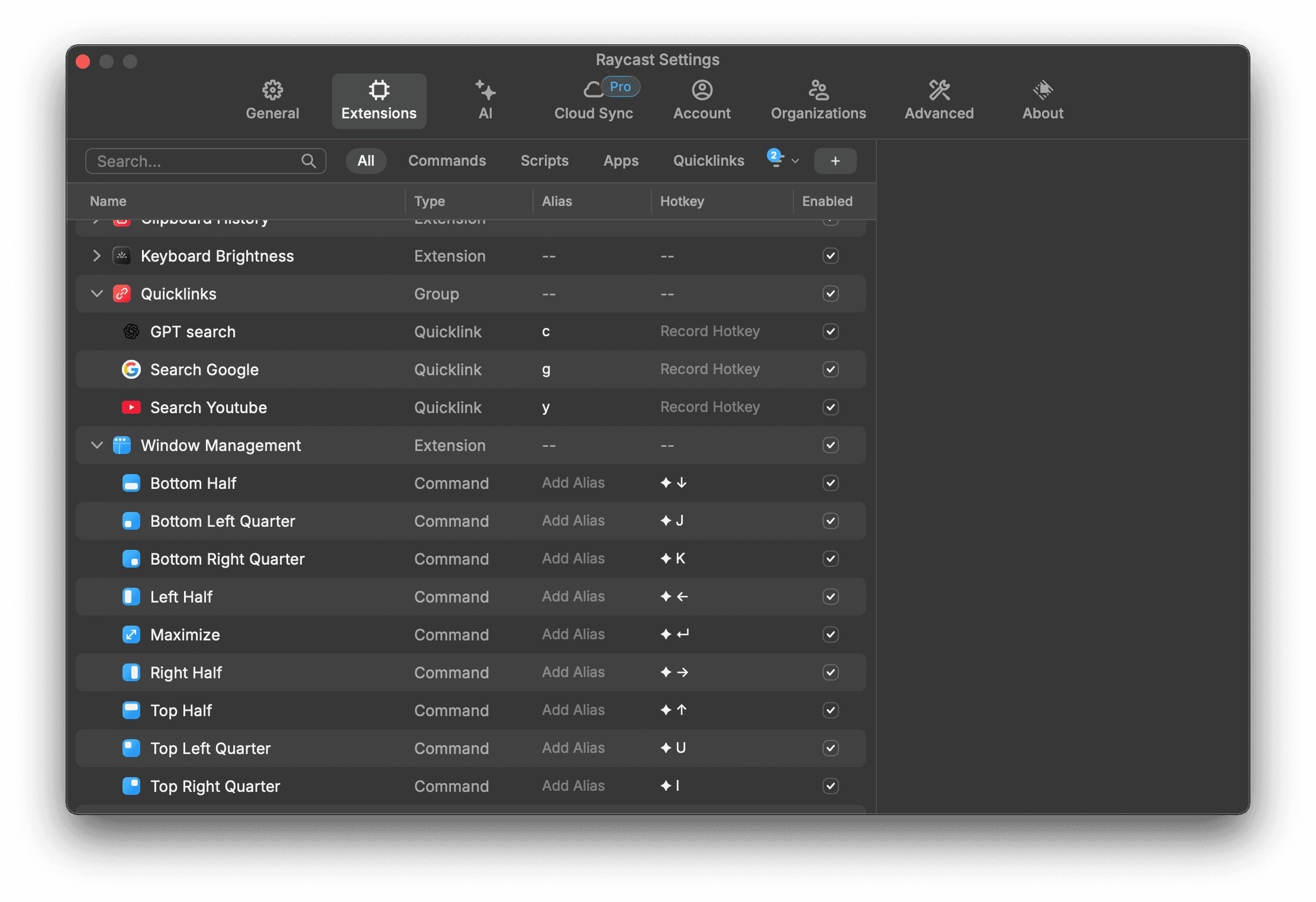
Raycast keyboard shortcuts
My Most Used Shortcuts
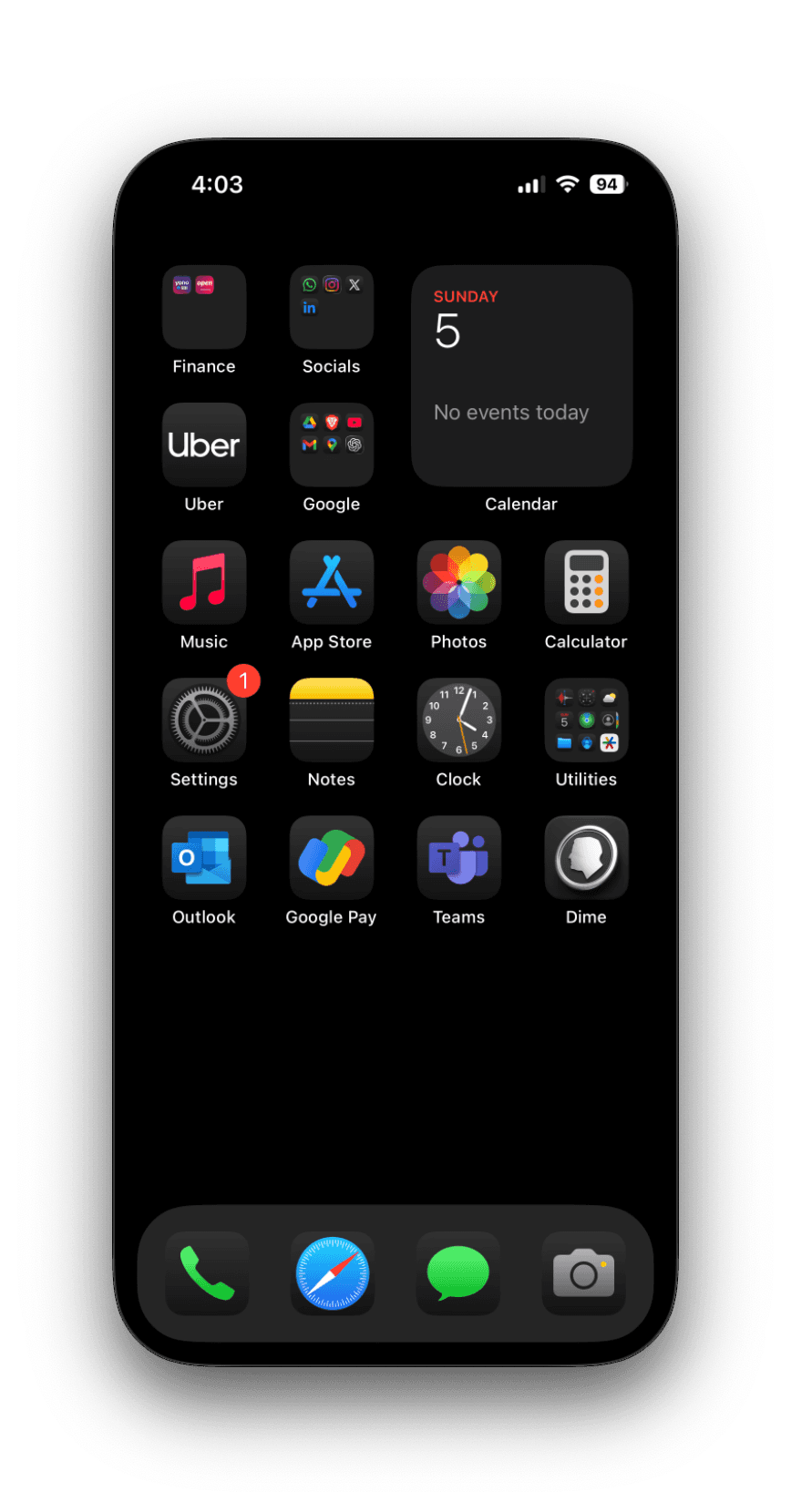
Minimal iPhone home screen
These shortcuts eliminate almost all app-switching friction.
I never hunt for windows.
I never search through the dock.
I never think about where something is.
I just press a key.
Raycast also handles:
Because of that, I completely removed Rectangle.
One less application.
One less thing to maintain.
5. Why I Use Vertical Tabs
Modern development means having lots of tabs open.
Documentation.
GitHub.
Design references.
Pull requests.
AI tools.
Traditional horizontal tabs eventually become impossible to manage.
Switching Brave to vertical tabs was one of the simplest improvements I've made.
It uses screen space more efficiently and makes navigation feel organized instead of chaotic.
Combined with a blank start page and minimal bookmarks, the browser feels more like a tool and less like a destination.
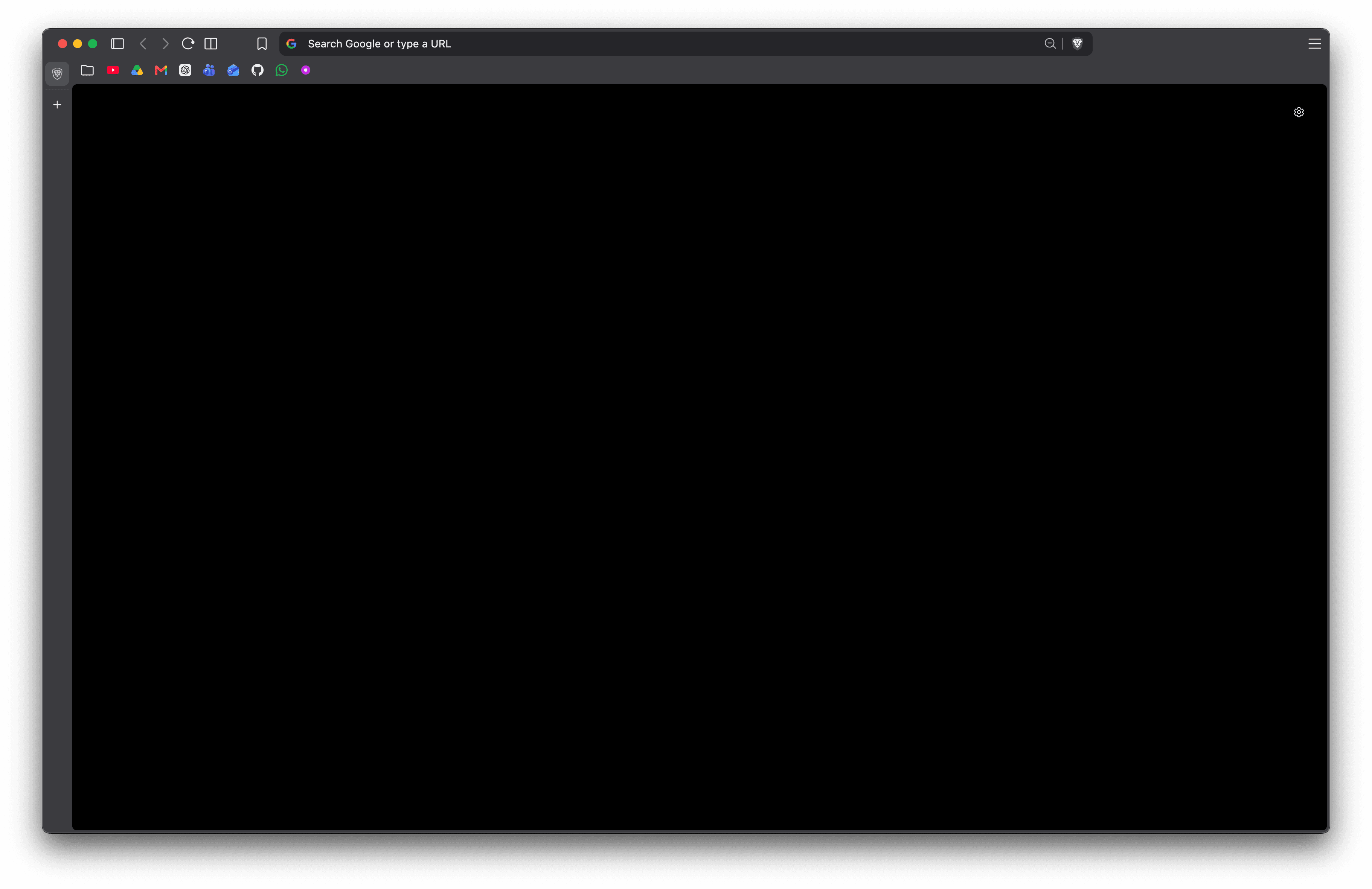
Brave browser with vertical tabs
6. Notes: The APLA System
I keep all notes inside Apple Notes.
No migrations.
No plugins.
No second-brain software.
Just Notes.
Everything is organized using a simple structure I call APLA.
A — Actions
Tasks and next steps.
P — Projects
Current goals and active work.
L — Learning
Books, articles, ideas, and documentation.
A — Archive
Completed work and reference material.
That's it.
Four buckets.
Simple enough to maintain.
Flexible enough to scale.
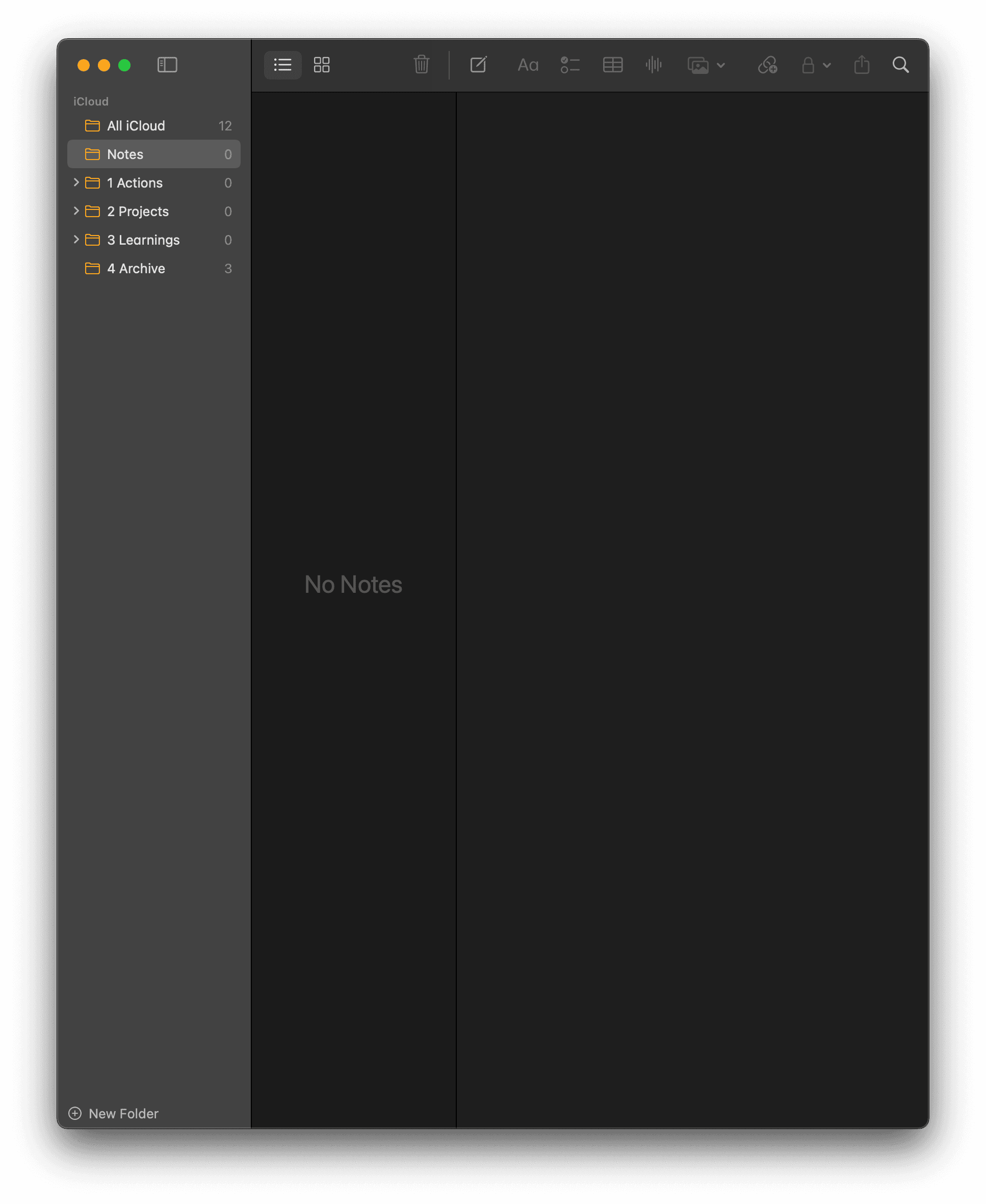
APLA note-taking system in Apple Notes
7. The Rebuild Script
One of my favorite forms of productivity is eliminating dependency on a single machine.
If my Mac disappeared today, I could rebuild my environment quickly.
I maintain an installation script that handles:
The exact contents change over time.
The idea doesn't.
My workflow is reproducible.
That's more valuable than any individual tool.
Download the full bootstrap script →
8. Small Automations Matter
I don't chase complicated automation systems.
Most productivity gains come from removing tiny bits of friction that repeat hundreds of times.
A useful alias.
A keyboard shortcut.
A script.
A launcher command.
None of them are impressive individually.
Together they create flow.
The best automation is usually the one you stop noticing.
9. Systems Over Discipline
A lot of productivity advice focuses on discipline.
Wake up earlier.
Work harder.
Try harder.
I've found the opposite works better.
Design systems that require less effort.
Remove distractions instead of resisting them.
Reduce decisions instead of optimizing them.
Build defaults that support focus automatically.
When the environment is simple, concentration becomes natural.
My Current Minimal Developer Stack
Core Apps
Notes
Browser
Workflow
Philosophy
Closing Thoughts
As developers, we spend our lives building complex systems.
Minimalism is how I create space to think clearly about them.
My setup isn't designed to make me work faster.
It's designed to make work feel calmer.
Because calmness creates focus.
Focus creates quality.
And quality compounds over time.
Code calmly. Work simply. Let clarity do the heavy lifting.